Notecards
Flat or folded, one or two colors, cotton paper.
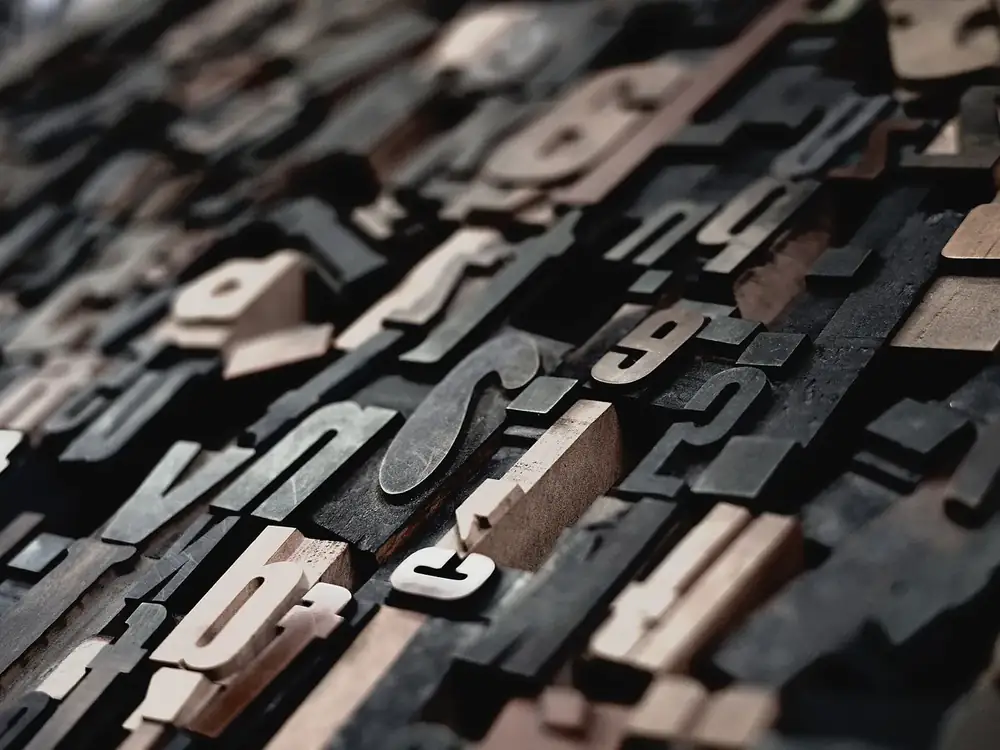
A notecard is the plainest thing we print and the one that shows the press most clearly: a short line, a mark or a name, pressed into a heavy cotton sheet so that a thumb can find it. This page sets out the stock, the sizes, the plate, the impression and the ink, so the questions in your first message are already half answered.
The card stock
We print on cotton rag paper, uncoated, in two weights. The single-thickness cover sheet is what most folded cards are made from; it scores cleanly and stands up on a shelf. The double-thick sheet is two of those duplexed into one, and it is the stock for flat cards: it takes a deep impression without the back of the card reading the text in reverse. Both come in white and in a soft natural. The deckle edge is available on the flat cards in the two larger sizes, where the torn edge has room to read as intended rather than as damage.
Sizes and envelopes
| Card | Flat size | Envelope |
|---|---|---|
| A2 | 4¼ by 5½ inches | A2, square flap or pointed |
| A6 | 4¾ by 6½ inches | A6, square flap or pointed |
| A7 | 5⅛ by 7 inches | A7, square flap or pointed |
| Square | 5¼ by 5¼ inches | 5½-inch square |
Folded cards are cut at twice the flat size and scored on the press before folding, so the fold sits on the score and the spine does not crack. Envelopes are matched to the paper and can be printed on the flap with a return address in the same ink as the card.
Two colors
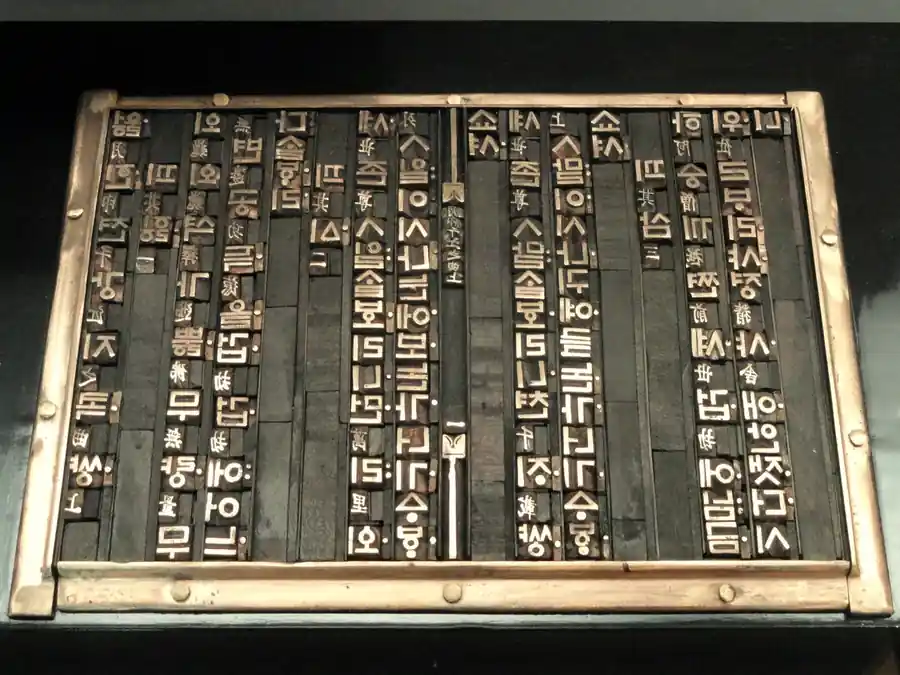
A second color is a second plate, a second make-ready and a second pass through the press after the first color has dried overnight. The two plates are brought into register by eye and by gauge pin, and we hold that register through the run. Two colors that touch or overlap are harder to hold than two that sit apart, so if you have a choice, leave a little air between them. We do not print a third color on a notecard; the sheet starts to show the handling.
A die and a plate
The two words are often used as if they meant the same thing, and they do not. A plate prints. A die cuts or shapes. We make a photopolymer plate from your artwork; it carries the image in relief, it is inked by the rollers on each pass, and it presses that image into the paper. A die is a steel rule bent to a shape, a rounded corner, a scalloped edge, a slot for a ribbon, and it cuts through the sheet without ink.
Most notecard jobs need only a plate. If you want a shaped edge or a cut-out, the die is a separate step on the press after printing, with its own make-ready, and it adds time to the job. A die also has to be made to your shape before it can be used, and that has its own lead time. Tell us in the first message if you have a shape in mind, and we will say what it means for the schedule before the proof is pulled.
A plate lasts for the run and for a reprint. A die lasts for years and can be used again on a later job at the same size.
How deep we press
A kiss impression barely dents the surface: the ink sits on the paper and the relief is felt more than seen. A deep impression shows as a visible bite, with the surface of the sheet pushed down into the paper. We set the impression for the stock and the artwork: deep on the double-thick cotton, where the sheet can absorb it; shallower on the single sheet, where a heavy bite would show through to the back of a folded card.
Why deeper is not better
A fine line pressed too hard fills with ink and thickens until the letterforms close up. A large solid pressed hard crushes the fibers unevenly, so the middle of the shape prints paler than its edge. The back of the card starts to read the text in reverse, and on a folded card the impression on one panel telegraphs through to the other. We aim for the impression the sheet can carry, which is usually a little less than the one first asked for, and the proof is where you see and feel the difference.
Ink colors we keep
Six house inks are mixed and on the shelf, and choosing one of them costs no bench time at all. They are the colors that sit well on cotton and that we can hold from one run to the next with the least drift. The rust and the moss are the two we print most; the warm black is a black with a little brown in it, so it does not go cold on a natural sheet.
A mixed color
A color outside the six is mixed by hand from base inks. We work against an ink drawdown on your paper, because the same mix reads differently on white and on natural stock, and we keep adjusting until the drawdown matches the swatch you sent as closely as the paper allows. That takes an hour or two of bench time before the press is touched, and it is the one thing on this page that adds to the job beyond the printing itself.
The mix is then kept in a sealed tin with the job name on it, for the run and for any reprint. Between a run and a reprint a mixed color can still drift a shade, for the reasons set out on the printing page, so if two batches must sit side by side, order them together. Metallic inks are possible on the double-thick sheet only, and they print softer than a flat color; we will show you a drawdown before you decide.
The smallest run is fifty cards of one design in one size. Below that, the make-ready outweighs the printing so far that the job stops making sense for either of us. There is no largest run, only a longer schedule.
Ready for a proof?
Send the artwork, the size, the stock and the ink, and roughly how many cards. We reply with any questions, then pull the proof and post it.
Artwork that prints well
A vector file at the finished size, in black only, with lines no thinner than a fine pen stroke. Type is easiest to hold at the sizes used for a name or a short line; very small type fills in. A clean scan of a drawing in solid black works too. Send it in the first message and we will say at once if anything needs to change.
Artwork that does not
Photographs, gradients, tints and anything built from many tones. Hairline rules and very small type. White text on a full solid, which asks the sheet to carry a large flood of ink that prints unevenly. If your artwork is one of these, the reply will say so and suggest what to change.